
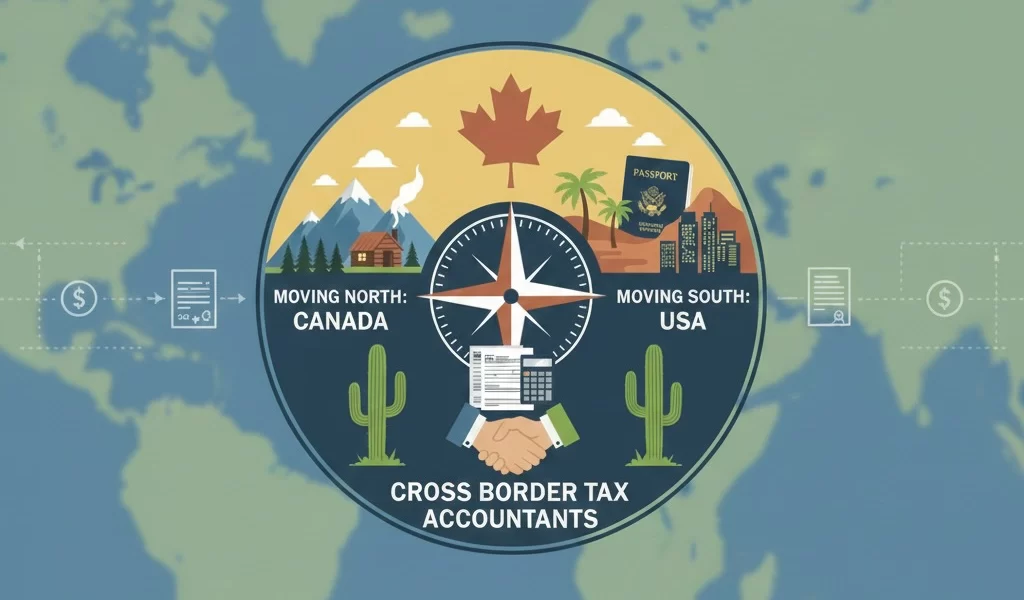
Life rarely respects national borders. You might find yourself moving for a career opportunity in Silicon Valley, retiring to the coast of British Columbia, or investing in real estate across the line. While the physical move requires logistics and packing tape, the financial move requires a completely different strategy.
Navigating the tax systems of two different countries—the United States and Canada—brings a unique set of opportunities and significant challenges. The rules are intricate, the forms are numerous, and the consequences of a mistake can be expensive. Complex tax issues often require the expertise of specialized accountants and an experienced accounting firm to ensure proper tax compliance and financial management for both Canadian and US clients. Many people assume that because the countries are neighbors, their tax laws are similar. Unfortunately, that assumption often leads to unexpected tax bills.
Whether you are an American living in Canada, a Canadian moving to the U.S., or an investor with property on both sides, understanding the basics is non-negotiable. Comprehensive accounting, tax services, and tax support are available for Canadian and US clients, including individuals, corporations, and those engaged in cross border business. Services are tailored for US citizens living in Canada, Canadians living in the US, and those affected by immigration or residency changes. Personal tax planning and compliance are also key components of the suite of services offered to clients. This guide will walk you through the foundations of cross-border taxation, helping you protect your assets and maintain compliance without paying a dollar more than you owe. External factors, such as changing tax laws and international economic relationships, can affect tax compliance and the need to file taxes in both countries.
Introduction to Cross-Border Tax
Cross-border tax is a critical consideration for anyone living, working, or investing across the US-Canada border. Whether you’re an individual relocating for work, a business expanding operations, or an investor with interests on both sides, understanding the cross border tax landscape is essential. Each country has its own tax laws and regulations, and the tax implications of cross-border activities can be significant.
Navigating this complex environment requires more than just basic tax preparation. Cross border tax planning is key to managing your tax obligations, minimizing your tax burden, and avoiding significant penalties. A personalized approach to cross border tax preparation ensures that you remain compliant with both US and Canadian tax laws, while also taking advantage of available credits, deductions, and treaty benefits. By proactively managing your cross border tax situation, you can protect your assets, reduce your overall tax liability, and achieve greater financial clarity as you move or do business across the border.
The Foundation: Residency vs. Citizenship
Before worrying about specific forms, you must understand the fundamental difference in how Canada and the U.S. view taxpayers. This distinction is the root of almost all cross-border complexity.
Canada operates on a residency-based system. If you are a tax resident of Canada, the Canada Revenue Agency (CRA) taxes you on your worldwide income. Your citizenship is generally irrelevant. You become a tax resident by establishing significant residential ties, such as having a home, spouse, or dependents in Canada.
The United States operates on a citizenship-based system. This is unique among major economies. If you are a U.S. citizen (or Green Card holder), the IRS taxes you on your worldwide income regardless of where you live. Even if you have lived in Toronto for 30 years and haven’t set foot in the U.S., you likely still have an annual U.S. tax filing obligation. This creates unique tax compliance challenges for a US citizen living in Canada or a Canadian citizen living in the US, as both must navigate the tax laws of their country of residence and their country of citizenship. Tax compliance is essential for any citizen living abroad to avoid penalties and ensure proper filing with both the CRA and IRS.
The Role of the Tax Treaty
If Canada taxes residents and the U.S. taxes citizens, you might worry about paying tax twice on the same income. Fortunately, the Canada-U.S. Income Tax Convention (the “Tax Treaty”) exists to prevent this.
The treaty provides mechanisms like “tie-breaker rules” to determine where you are a resident for tax purposes. More importantly, it allows for Foreign Tax Credits. Generally, you calculate your tax liability in both countries and claim a credit on one return for taxes paid to the other. While you have to file in both places, the treaty ensures you usually only pay the higher of the two countries’ tax rates, rather than the sum of both.
For Canadians Moving to the U.S.
Leaving Canada involves more than just handing over your house keys. The CRA views your departure as a significant tax event. Changes in immigration status can trigger new tax compliance requirements, and you may need to file taxes in both Canada and the US. Clients moving between Canada and the US must be proactive in understanding their new tax obligations to ensure full tax compliance and avoid unnecessary penalties.
The “Departure Tax”
When you cease to be a Canadian tax resident, the CRA considers you to have sold most of your property at its fair market value and immediately reacquired it. This is known as a “deemed disposition.” If your assets—such as stocks or mutual funds—have appreciated in value, this can trigger a capital gain, resulting in a “departure tax.” While some assets like Canadian real estate and pensions are exempt, you must plan for this potential liquidity crunch before you cross the border.
The Substantial Presence Test
How do you know when you become a U.S. resident for tax purposes? It isn’t always the day you arrive. The IRS uses the “Substantial Presence Test,” a formula based on the number of days you are physically present in the U.S. over a three-year period.
If you meet this test, you are taxed as a U.S. resident on your worldwide income. It is vital to track your days carefully, as accidentally becoming a U.S. tax resident can complicate your financial life significantly.
The TFSA Trap
One of the biggest pitfalls for Canadians moving south is the Tax-Free Savings Account (TFSA). While the TFSA is a fantastic vehicle in Canada, the IRS does not recognize its tax-free status. In the U.S., a TFSA is often treated as a “foreign grantor trust.” This means all income earned inside the account is taxable, and it requires complex annual reporting. Many professionals recommend liquidating TFSAs before becoming a U.S. tax resident to avoid this headache.
For Americans Moving to Canada
If you are an American moving north, your relationship with the IRS does not end. Tax compliance is especially important for any US citizen living in Canada, as clients must stay up to date with their tax obligations to avoid penalties and double taxation. As mentioned, U.S. citizens have an ongoing obligation to file a U.S. tax return (Form 1040) every year, reporting worldwide income. Clients who are US citizens living abroad must file taxes annually to remain compliant and avoid costly penalties.
Reporting Foreign Assets (FBAR and Form 8938)
In addition to your tax return, the U.S. Treasury requires strict transparency regarding foreign bank accounts.
- FBAR: If the combined value of your foreign financial accounts (bank, investment, and some pensions) exceeds $10,000 USD at any time during the year, you must file FinCEN Form 114.
- Form 8938: If your foreign assets exceed higher thresholds (starting at $200,000 for expats), you must file this form with your tax return.
The penalties for failing to file these forms can be severe, often starting at $10,000 per violation. Even if you owe zero tax to the IRS, you must keep up with your information reporting.
Managing U.S. Retirement Accounts
If you hold a 401(k) or IRA, the treaty generally allows these to grow tax-deferred while you live in Canada. However, taking distributions requires care. Different rules apply to how these withdrawals are taxed and which country gets the “first bite” of the revenue. Always consult a professional before moving money out of these accounts.
IRS Streamlined Filing Process
For many US citizens and green card holders living in Canada, the realization that they have ongoing US tax filing obligations can come as a surprise. If you’ve missed filing US tax returns or reporting foreign assets, the IRS offers a lifeline: the Streamlined Filing Process. This program is specifically designed to help delinquent taxpayers—those who have unintentionally failed to meet their US tax obligations—get back into compliance without facing significant penalties.
The IRS Streamlined Filing Process requires you to file tax returns for the past three years and report your foreign financial assets for the past six years. This process is especially relevant for cross border taxpayers who may not have been aware of their US tax responsibilities while living in Canada. By taking advantage of this program, you can avoid the harsh penalties that often accompany non-compliance and ensure your tax affairs are in order.
Navigating the IRS streamlined filing process can be complex, especially when dealing with cross border tax issues and foreign assets. Working with a cross border tax specialist can help you understand the requirements, gather the necessary documentation, and complete the process efficiently. This personalized support ensures that you meet all compliance requirements and can move forward with confidence.
Cross-Border Real Estate
Owning property across the border is a common dream, but selling it triggers specific withholding rules.
For clients involved in cross-border real estate transactions, specialized accounting and tax services are essential to ensure compliance and effective financial management.
Canadians Selling U.S. Property (FIRPTA)
Under the Foreign Investment in Real Property Tax Act (FIRPTA), when a non-resident sells U.S. real estate, the buyer is required to withhold 15% of the gross sales price and send it to the IRS. This acts as a security deposit against capital gains tax. To get a refund of any excess amount, you must file a U.S. tax return (Form 1040-NR) the following year.
Pro Tip: You can apply for a Withholding Certificate (Form 8288-B) before closing. If approved, this allows for a reduced or zero withholding rate based on your actual expected tax liability, improving your cash flow immediately.
Americans Selling Canadian Property
Canada has a similar system. When a non-resident sells Canadian real estate, they must notify the CRA within 10 days and apply for a Clearance Certificate (Form T2062). Without this certificate, the buyer must withhold 25% (or sometimes 50%) of the gross purchase price. The process to get the certificate can take months, so sellers should start this process well before the closing date.
Estate Planning Strategies
Estate planning is a vital component of cross border tax planning for anyone with assets in both the US and Canada. The two countries have distinct estate tax laws, and failing to account for these differences can result in unnecessary tax burdens and complications for your heirs. Effective cross border estate planning helps you manage the tax implications of transferring assets, ensuring that your wealth is preserved and distributed according to your wishes.
Key strategies may include the use of trusts, carefully drafted wills, and other estate planning tools tailored to the cross border context. These strategies can help minimize exposure to estate tax, address double taxation issues, and ensure compliance with both US and Canadian tax laws. By working with a cross border tax specialist, you can develop a comprehensive estate plan that protects your assets, reduces your tax liability, and provides peace of mind for you and your family.
Achieve Financial Clarity
Cross-border taxation is not a do-it-yourself project. The interaction between two distinct tax codes creates a landscape where a strategy that works in one country might be penalized in the other. Navigating these complex tax situations requires specialized expertise. However, with proactive planning, you can manage these complexities.
The goal of cross-border planning is not just compliance—it is strategy. By understanding your residency status, managing your investment accounts correctly, and staying ahead of real estate withholding rules, you can embrace your cross-border lifestyle with confidence.
If you are planning a move or currently managing assets on both sides of the border, seek out professional guidance from experienced accountants and an accounting firm that specializes in cross-border tax services. These services provide ongoing tax support for clients—including individuals, corporations, and those engaged in cross border business—to help navigate complex tax challenges and ensure compliance. Your financial peace of mind is worth the investment.
Conclusion and Next Steps
Successfully navigating the world of cross border tax requires a deep understanding of the tax laws and tax implications that come with living, working, or investing across the US-Canada border. The cross border tax landscape is complex, and even small oversights can lead to compliance issues or increased tax burdens. By prioritizing cross border tax planning and seeking the guidance of a cross border tax specialist, you can ensure that your tax obligations are met and that you’re making the most of available credits and deductions.
The next step is to take a proactive approach: consult with a cross border tax expert who can provide a personalized approach to your unique situation. With the right support, you can confidently manage your cross border tax responsibilities, stay compliant, and focus on what matters most—whether that’s growing your business, protecting your assets, or enjoying your cross border lifestyle.
Need Help from a Cross-Border Tax Preparer or IRS Taxpayer Assistance Center in Toronto or Oakville, Ontario?
Karlene J. Mulraine, EA, CPA, CA, CPA (NH) is the President of Cross-Border Financial Professional Corporation. Follow us on LinkedIn and Twitter, or hang out on Facebook.
The views expressed in this article are those of the author and should not be relied on to make decisions. Consider discussing your specific circumstances with an appropriate specialist.